
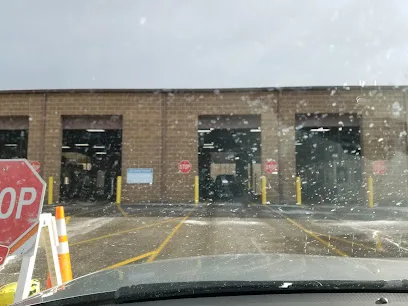
If your Ohio registration paperwork tells you an emissions test is due, the biggest time-saver is matching your vehicle and notice to the inspection workflow the station will actually run. Ohio E-Check lists public contact details and an official program site for Choice Plus E-Check Ohio, which makes it easier to confirm what you need before you drive over.
Below is a practical way to evaluate whether Ohio E-Check is the right option for your situation—without assuming the directory label automatically matches your vehicle or your DMV deadline.
Start with the paperwork: what your notice is actually asking for
Before you call, find the key words (and dates) on your notice. Some Ohio drivers are prompted through standard registration cycles, while others receive an additional notice that effectively creates a deadline. Ohio E-Check’s official program pages explain that a passing E-Check certificate can be used to satisfy compliance steps with the BMV after a passing test—so you want the test to complete before the critical date, not just “sometime this year.”
Use Ohio E-Check’s public contact path to confirm your vehicle test type
Ohio E-Check’s listing includes concrete contact signals you can use to verify the current workflow: address 2021 Brown St, Akron, OH 44319, United States and phone +1 800-227-8378, along with the official site http://www.ohioecheck.info/. Call and ask a targeted fit question, such as whether they will run the inspection for your specific vehicle (year, make/model, and fuel type) and whether any special handling applies for your status (for example, “repair waiver” conversations after a failure).
On the official Ohio E-Check program pages, the program also references policy timing for certificates and notes that certificates are good for 365 days. That doesn’t remove the need to confirm, but it gives you a reasonable frame: you should still ask whether they will complete your inspection using the appropriate timeframe for your renewal or notice.
Plan for outcomes: what to ask if you fail the emissions test
Failing an emissions inspection happens. The decision step is making sure you understand what the station (or program) expects after the failure. Ohio’s official program materials note that Ohio Administrative Code changes can affect repair waiver minimums after certain reclassification actions, including a change described as increasing a minimum required repair/diagnostic amount (from $300 to $450) effective January 1, 2026. Even if your own situation is different, it’s a strong reason to ask: “If I don’t pass today, what documentation do you provide and what next steps does the program expect?”
Clarify retest timing and authorization details before you pay for repairs
When your vehicle fails, the cost of guessing is usually a second trip. Ask whether you should schedule a retest immediately, and whether any approvals, paperwork, or certificate information must be completed first. The official Ohio E-Check program pages describe how certificates relate to BMV compliance, so you can also ask how the certificate number will be handled in your case.
Make your visit “ready” so the station can run the inspection efficiently
Even without a long checklist, you can reduce preventable delays by treating “ready” as a conversation topic. On the official program pages, Ohio E-Check full-service stations are described as open Monday–Friday 8 am–6 pm and Saturday 8 am–1 pm, with a no-appointment framing for the full-service flow (arrive with the vehicle and pull into the entrance lanes). Before you go, call anyway and confirm that your exact situation still fits the walk-in model.
Then, arrive with whatever the station asks you to bring (commonly your renewal or suspension/notice paperwork). Also expect the station to confirm basic vehicle details that affect an emissions inspection. If you’ve had recent repairs or warning lights, ask how they want you to handle “vehicle readiness” before testing.
When Ohio E-Check is a good fit—and when to look elsewhere
Ohio E-Check is often a practical choice when you want to use an established program framework, call to confirm the inspection workflow, and align your visit with your Ohio renewal or notice timeline. It’s less of a fit if the station can’t clearly explain how it handles your vehicle details, your failure/repair waiver questions, or how the certificate will connect to your BMV steps.
If you can’t get clear answers on the phone using the station’s public contact path, that’s a signal to compare nearby options while your timeline still allows retesting if needed.


