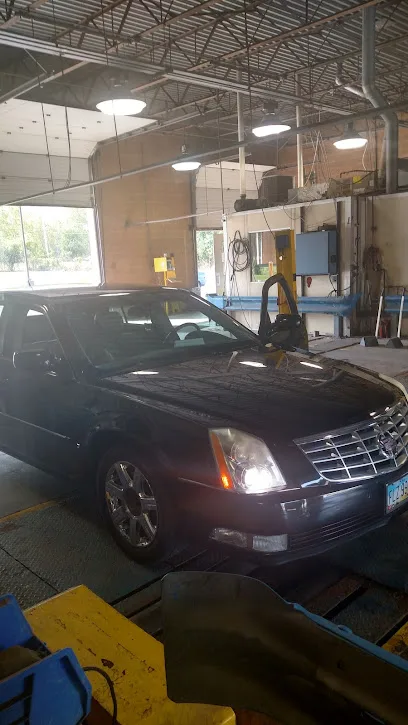
If your Ohio paperwork points you to an emissions test, the fastest way to avoid a second trip is to confirm that your vehicle’s current status matches the workflow your notice is referencing. For drivers using Ohio E-Check at 17704 St Clair Ave., Cleveland, OH 44110, United States, this guide focuses on the smog-and-emissions process details that affect certificate timing and next steps.
Start with your notice: what “E-Check needed” means for the test workflow
The Ohio E-Check program issues a certificate after a passing emission inspection, and the BMV can treat the vehicle as compliant based on that certificate. The most important step is to read your notice closely and match what it requires to what the station can process.
Ohio’s official program information notes that if you received a 20 Day Suspension Notice, taking your vehicle to an automobile emission testing station and obtaining a passing emission test before the deadline results in the certificate number being sent to the BMV, helping you avoid an additional trip to a BMV office.
Because notices can also relate to failed results, readiness status, or repair timing, it helps to verify your specific path before you arrive. If you want confirmation, call the program line at +1 800-227-8378 and ask which workflow they should use based on the wording of your notice.
Readiness and repair timing: why your current vehicle status matters
Many unnecessary trips happen when a vehicle isn’t ready for the testing workflow. The program materials state that readiness issues can occur after recent repairs, and can also involve vehicles that are out of state or in storage.
In those situations, the program may provide a one-time extension to help prevent suspension while you complete compliance. Before you schedule or drive in, ask how “ready” is determined for your specific setup.
If your vehicle recently had diagnostic work or emissions-related repairs, confirm that the readiness requirements are met before testing and retesting. Clarifying readiness expectations with the program line can reduce the chance of returning after an avoidable mismatch between your paperwork and your vehicle’s current condition.
Failure outcomes: repair waiver minimum changes in the Cleveland area
Even with preparation, some vehicles require repairs after a test failure. Ohio’s official program information includes a policy change tied to the ozone reclassification in the Cleveland area: the minimum amount required to be spent on motor vehicle repairs and diagnostic fees for a repair waiver increases from $300 to $450, effective January 1, 2026. The program notes this is specified in Ohio Administrative Code 3745-26-01(PP).
When planning for a possible failure outcome, include both the repair work and the documentation needed for any waiver considerations, and ask how retest scheduling works if your first result is not passing.
Certificate timing: plan around the 365-day validity window
Another decision point that can reduce rework is timing. Ohio’s official program information states that certificates are good for 365 days, allowing vehicles to be tested up to one year in advance of registration. If your deadline isn’t immediate, using the certificate’s 365-day window can help you coordinate repairs and any needed retest without rushing.
Before you drive in, confirm practical details that affect your day: what to bring from your notice, and what information you should expect back after the inspection. If you’re unsure which situation applies to you, Ohio’s official program page directs motorists to the appropriate E-Check station paths.
For full-service stations, Ohio’s program information notes that they are open Monday–Friday 8 am–6 pm and Saturday 8 am–1 pm, and that you can arrive without an appointment.
Two quick questions to ask before you arrive
Before you head to Ohio E-Check at 17704 St Clair Ave., make one short call to +1 800-227-8378 and ask:
- Which emissions-test workflow should we use based on my notice and my vehicle’s current status? (especially if readiness or recent repairs are involved)
- If the vehicle fails, what are the next steps for certificate/waiver timing and retest? (including the repair-waiver minimum change effective January 1, 2026)
When you get those answers aligned with your paperwork and timeline, your visit at Ohio E-Check 138 becomes a single, streamlined compliance step rather than a cycle of repeat trips.