2026-01 · STATE EMISSIONS DIRECTORY STAR · TEST-ONLY · WALK-IN · DMV RENEWAL
Find a station →

Zerox24  ·  Stations  ·  Atlanta, GA

1st Stop Emission Inc.

2595 M.L.K. Jr Dr SW, Atlanta, GA 30311, United States
SERIES ZX-NC-098 Inspection Ticket 2026 · 06 · 18
STAR Not detected — call to ask
TEST-ONLY Not detected — call to ask
WALK-IN Not detected — call to ask
DIESEL Not detected — call to ask
Bring on the day
  • Registration renewal notice
  • Current vehicle registration card
  • Driver's license + payment

Limited public detail on file. The lights above are best-effort — phone-confirm before you go.

What this means for your DMV renewal

  • STAR is a California-only program, so it doesn't apply here.
  • Not flagged as test-only — likely a full-service shop that can also fix a failure on the same visit.
  • Walk-in policy unclear — phone to confirm before driving over.
  • Diesel not listed — verify by phone if you have a diesel.

Where to find them

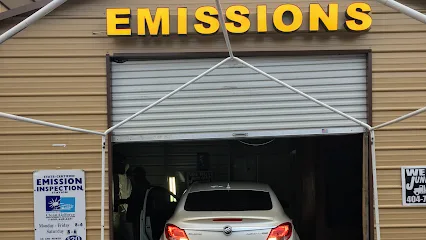
1st Stop Emission Inc. storefront Storefront

2595 M.L.K. Jr Dr SW, Atlanta, GA 30311, United States

Get driving directions → +1 404-699-4686 Open in Google Maps →

Service details

Plain-English notes on each inspection type this station mentions, plus a 7-row source-attribution matrix so you can see where each signal came from.

  1. 01

    What a standard smog check covers

    For a modern car (1996+ gas), it's mostly an OBD-II scan plus a visual inspection of the emissions hardware. Older vehicles may also get a tailpipe sniff and a fuel-cap pressure test. The whole sequence runs 15–25 minutes when there's no queue.

Source attribution — all 7 signals
  • 07. Smog check ● Listed on Google Maps
  • 01. STAR certified ○ Not sure — ask
  • 02. Test-only station ○ Not sure — ask
  • 03. No appointment needed ○ Not sure — ask
  • 04. Fast pass ○ Not sure — ask
  • 05. DMV renewal support ○ Not sure — ask
  • 06. Diesel smog check ○ Not sure — ask

Where they work

Atlanta
PREP CHECKLIST

Before you drive over

The four things to check before pulling out of your driveway — what to bring, whether you even need a check this cycle, the rule that applies in your state, and the questions everyone asks.

1 · Bring with you

  • Registration renewal notice (the postcard or PDF from the DMV)
  • Current vehicle registration card
  • Driver's license or photo ID
  • Payment — most stations take cash and card; the certificate fee is separate from the inspection
  • Vehicle title, only if this is a change-of-ownership or out-of-state transfer test

2 · When you can skip

  • Car under 8 model years (CA) Most California vehicles under 8 model years pay a smog abatement fee at renewal instead of getting an inspection.
  • Hybrid + zero-emission Battery-electric and most hybrids are exempt from the routine biennial check, though some still need a one-time inspection on transfer.
  • Gas car older than 1976 Pre-1976 gas vehicles in California are exempt from the smog program entirely. Other states draw the line at different model years.
  • Family transfer (some states) Title transfers between immediate family in California don't trigger a new smog check if the previous one is still current. Confirm in your state.

3 · The rule in GA

Emissions testing rules in GA are typically county-based — cities and metro areas with worse air quality require it, while rural counties often don't. Most programs run on an OBD-II scan for 1996-and-newer gas vehicles; older vehicles may need a tailpipe test. Unlike California's STAR system, most states don't require a separate higher-tier station, so any certified shop in your county can usually handle the inspection.

4 · Common questions

How long does a typical smog check take?

About 15–25 minutes of actual inspection work for a modern OBD-II vehicle. The variable is wait time — a busy Saturday can mean an extra 30–60 minutes in line, while a Tuesday morning is often walk-right-in. Diesel and older tailpipe-test vehicles can take a bit longer.

How much does a smog check cost?

Costs vary by state and station. In California, expect roughly $30–$70 for the inspection plus an $8.25 state certificate fee (separate). STAR stations sometimes charge a few dollars more. Always ask whether the quoted price includes the certificate fee.

What's the difference between a STAR station and a regular smog station?

STAR is California's higher-tier certification. The state directs about 1 in 10 vehicles to STAR-only stations randomly, plus all gross-polluters and most directed retests. A regular station can handle most renewals, but if your DMV notice flags STAR, you have to use a STAR shop specifically.

What happens if my car fails the smog check?

You'll get a printout listing what failed. A test-only station can't do the repair, so you'd need a separate repair shop, then come back for a retest. In California, you may also qualify for the state's repair-assistance program if you meet income limits — ask the inspector before driving off.

Do I need to bring anything besides my car?

Bring your registration renewal notice, current registration card, ID, and a payment method. For change-of-ownership or out-of-state transfer tests, also bring the title. The shop electronically reports your pass to the DMV — you don't mail anything in.

Can I just drive somewhere without a current smog certificate?

If your registration is still valid, yes — the smog requirement is tied to renewal, not to driving. But once your registration expires, you can be ticketed and the DMV won't accept the renewal payment until the smog certificate is on file.

Listing description

1st Stop Emission Inc. is listed in Atlanta, GA as a smog station in the smog check and emissions inspection directory. This profile is written for vehicle owners comparing inspection fit, certification questions, appointment timing, and DMV-related steps who want a practical way to compare public facts before they call, book, visit, or request professional help. The goal is not to rank the provider or promise an outcome; it is to organize the visible evidence into questions that reduce confusion.

The most useful public signals for this listing are Smog check, smog check Atlanta, smog check near me, smog check GA, smog check services Atlanta, and Smog Check Station. Treat those signals as a checklist rather than a guarantee. A public category, review phrase, or website label can show what the provider appears to discuss, but it cannot prove current staffing, inventory, pricing, credentials, calendar availability, or the exact scope accepted today.

Start by confirming whether the station handles the vehicle type, what documents are needed, how failed inspections are explained, and how certificates are submitted. Those questions keep the conversation anchored in the reader's actual need instead of a broad directory category. If the answer is vague, ask for a clearer explanation of what is included, what is excluded, and what information the provider needs before giving a reliable next step.

Location still matters. Atlanta, GA smog check and emissions inspection can affect travel time, appointment rules, service area, local regulations, parking, accessibility, seasonal demand, and nearby alternatives. A listing that looks relevant on paper can still be a poor fit if the location, timing, or required preparation does not match the reader's situation.

The contact data in this record includes a listed phone number, no official website link stored in this snapshot, and a street-address reference. Use those details to verify the current path before sharing sensitive information or making plans. If a phone number, address, or website has changed, rely on the provider's current confirmation rather than on an older directory snapshot.

The public record does not expose a strong review base in this snapshot, so direct confirmation matters more than rating-based assumptions.

When comparing similar options on zerox24.com, keep the comparison consistent: same location, same timing, same requested scope, and the same must-have details. That makes answers easier to evaluate and prevents a polished but incomplete listing from looking stronger than a clearer, more relevant provider nearby.

Strong pages make uncertainty visible. If public sources do not show a detail, the page should say so indirectly by asking the reader to verify it. That is especially important for professional, healthcare, legal, automotive, venue, travel, and local-service categories where prices, credentials, policies, and availability can change after publication.

Do not treat this page as a guarantee of emissions compliance. Use the profile as preparation, not as a final recommendation. The right decision should come from current provider confirmation, source-backed facts, and the reader's own requirements rather than from copied marketing language or a generic template.

A careful reader should also note what is missing: exact prices, written policies, current openings, staff names, credentials, insurance language where relevant, warranty terms, and any rule that depends on the reader's specific case. Missing information is not automatically a negative signal, but it is a reason to ask better questions before relying on the listing.

For repeated comparison, save the details that are confirmed directly and separate them from details that only appeared in public search results. That habit makes follow-up easier, reduces misunderstandings, and helps the reader compare nearby alternatives without turning a directory profile into a promise.

The best use of this page is preparation. Read the public facts, decide which details matter most, then confirm those details through the provider's current contact path. That keeps the directory useful without pretending that public snippets can replace a current conversation, official policy, signed agreement, appointment confirmation, or professional judgment.

If two nearby listings look similar, compare the quality of the answers rather than the number of marketing phrases. Clear limits, plain explanations, and consistent contact details usually matter more than broad claims. A provider that explains what it can and cannot do is often easier to evaluate than one that leaves every important detail unstated.

Keep source timing in mind. Search results, review snippets, category labels, and business pages can lag behind real operations. This directory profile should therefore be treated as a structured note: useful for organizing questions, but still dependent on direct confirmation before money, travel, documents, property access, vehicle access, health decisions, or legal decisions are involved.