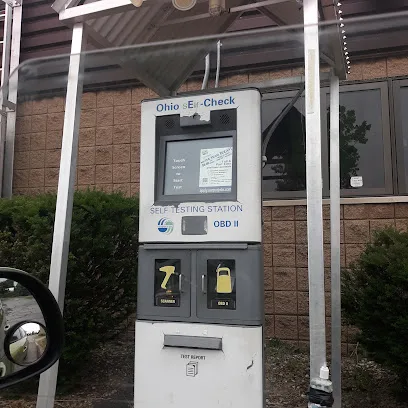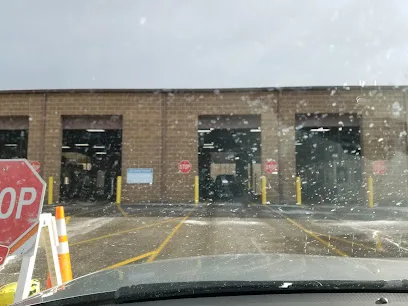
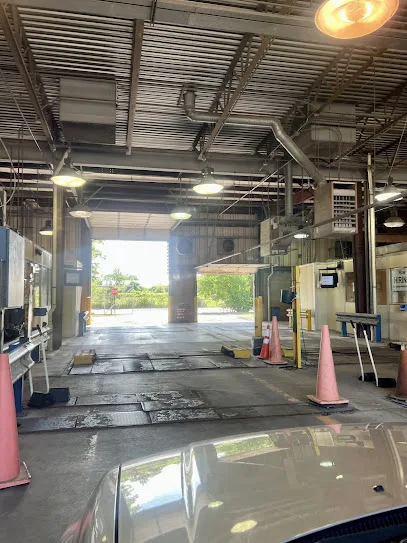
When your Ohio registration or BMV notice points you to an emissions inspection, the quickest way to avoid a repeat trip is to confirm the station workflow matches your vehicle’s situation. Ohio E-Check at 2724 E 55th St, Cleveland, OH 44104 is part of the statewide E-Check program, so the practical “fit” question isn’t just the location—it’s whether the paperwork, test type, and follow-up path align with what your notice requires.
What your BMV notice means for your E-Check test at 2724 E 55th St
Before you head to the lanes, treat the BMV or registration notice as the source of truth. The goal is to understand what the inspection is meant to accomplish for your specific case and what you should bring. Ohio E-Check’s official program guidance highlights using the program information for how stations operate and how certificates are handled for registration steps.
If you’re bringing in a vehicle that recently had repairs or has a Service Engine Soon light, ask the station to clarify what “ready” means for that visit. A clear explanation of the expected conditions can help prevent losing time on avoidable issues.
E-Check hours and “no appointment” details for planning your visit
Ohio E-Check’s program information indicates that full-service test stations are open Monday–Friday from 8 a.m. to 6 p.m. and Saturday from 8 a.m. to 1 p.m. The program guidance also notes that you typically do not need an appointment—you arrive with the vehicle and pull around to the entrance of the station lanes.
For a decision that actually saves you time, plan around the hours that fit your vehicle’s condition. If you think you may need to return after repairs, understanding the station’s practical flow and when follow-up is most convenient can help you schedule the next step with less friction.
Retest and repair-waiver budget: Ohio changes effective Jan 1, 2026
Failing an emissions inspection is often about what comes next—repairs, documentation, and how the program handles repair waivers. Ohio E-Check’s official site explains that Cleveland-area ozone reclassification results in changes to the minimum amount required for motor vehicle repairs and diagnostic fees associated with a repair waiver.
According to the program guidance, the minimum increases from $300 to $450 and takes effect January 1, 2026 for vehicles failing the emissions test. If you’re planning ahead for a likely failure, it helps to understand what that means for budgeting and paperwork so you can complete the repair process without unnecessary delays.
Certificate timelines: when you can test, and when the BMV gets the number
Another common surprise is how far in advance testing can be used for registration. The Ohio E-Check program site states that certificates are good for 365 days, and that vehicles can be tested up to one year in advance of their registration.
This policy can make it easier to work around real life—repairs, parts availability, and seasonal driving—while still keeping your registration timeline on track. If you received a specific notification from the BMV (including a suspension notice), the program guidance indicates that a passing test can send a certificate number automatically to the BMV. Even so, it’s smart to confirm how your certificate number will be used if your paperwork references a particular date.
When a quick call can prevent confusion
Ohio E-Check’s program contact details include the main phone line +1 800-227-8378 and the official site http://www.ohioecheck.info/. Calling can be worthwhile when your vehicle has recent repairs, your notice instructions are unclear, or you’re coordinating follow-up after a failure.
Bottom line for drivers going to 2724 E 55th St
For Ohio E-Check at 2724 E 55th St in Cleveland, the most reliable approach is to align your visit with your BMV notice, plan around the full-service hours, and understand the failure-to-repair path and certificate timelines. Doing that up front helps you treat the emissions test as the right step toward compliance—not the start of an avoidable loop.